
Manhattan Beach City Directory Shelf
Directory work in Manhattan Beach starts with knowing what each holder keeps. Its collection spans maps, directories, newspapers, photographs, and artifacts. The Historical Society's public pages stop short of a full title list, though. The county library's Californicana route adds depth. Federal census schedules supply the household context a street directory alone cannot.
| Collection | Verified years | Where held | Access |
|---|---|---|---|
| Manhattan Beach phone directory | 1960 specifically verified | Manhattan Beach Historical Society collection; multiple copies reported in 2024 | Curator inquiry; museum temporarily closed when inspected |
| Local maps, directories, ads, and newspapers | Exact years not published online | Manhattan Beach Historical Society | Email the historian |
| Californiana directories | Dating from the 19th century; exact Manhattan Beach titles and years not published | Los Angeles County Library, Norwalk closed stacks | Reference retrieval |
| California census schedules | 1850-1910 | Los Angeles County Library Californiana Collection | Closed-stack reference access |
| Federal population census | 1900-1950 useful for the city development era | NARA and partner sites; NARA Riverside research room | Public after the 72-year rule; appointment for the research room |
A table entry can mean two things. One line records a specific volume. Another only describes a general holding. Never assume a publisher or a missing year; leave those fields blank unless a source itself names them. A reference librarian can often locate volumes that no public page lists, so the strongest request names a person, a street, a rough year, and whether the search should run alphabetical or reverse.
Note: A single documented year proves one volume exists, not that the editions before or after it still survive anywhere.
A 1960 Manhattan Beach Directory Quirk
The most concrete local directory fact is oddly narrow. A Manhattan Beach Historical Society collection update describes a 2024 history sale that offered multiple copies of a 1960 Manhattan Beach phone directory. That confirms a real local volume exists. It does not prove a complete run on either side of 1960.
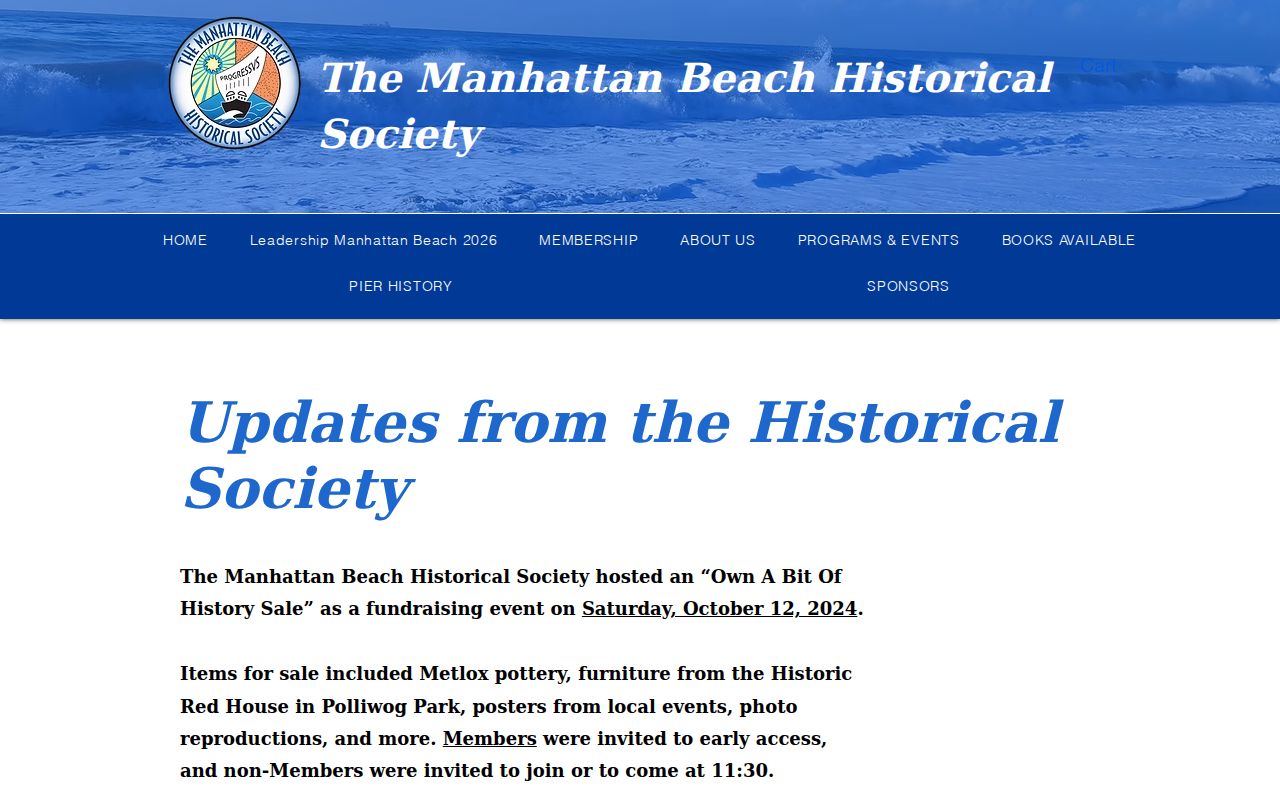
Duplicates reward careful comparison. One copy may carry a cleaner title page. Another may offer a less worn reverse section or a readable list of abbreviations. That is why a collection update matters even without digitized pages. It names a real object and its keeper. An email to the historian can settle the details. Ask about title-page wording, publisher, coverage area, telephone exchange, and whether a criss-cross section appears. Request an alphabetical sample too. Treat any reply as confirmation of one holding, never a promise that nearby years survive.
Insider tip. Request a photo of the title page and abbreviation key before treating a phone directory as a citywide name or address source.
Manhattan Beach Historical Society Holdings
The Manhattan Beach Historical Society home page introduces the Beach Cottage Museum and its local-history mission. The collection reaches far past directories. Maps, newspapers, photographs, advertising material, property clues, ephemera, and artifacts can each supply the date or address that gives a name entry meaning. That context often decodes an entry.
The museum sits at 1601 Manhattan Beach Boulevard. Email reaches the collection historian at historian@manhattanbeachhistorical.com. In 2022, professional archivists from History Associates began a fresh inventory and catalog project, and more than 1,000 documents, photographs, ephemera, and artifacts have passed through it. The count includes Manhattan Beach city directories. It is the first effort of its kind since 1993. The new catalog can answer a directory question sideways. A map settles a street name, an advertisement anchors a business, and a newspaper explains a gap. Ask for a person, street, decade, or collection type rather than a complete directory run.
Manhattan Beach Library and Californiana
The Manhattan Beach Library branch page is the natural first stop for reference help. It also connects visitors to the Historical Society.
The branch occupies 1320 Highland Avenue. Its present building, 21,500 square feet, opened on May 1, 2015. A branch librarian helps with newspapers, databases, or referrals. Deep genealogy questions route to the system's Californiana Collection at Norwalk Library, 12350 Imperial Highway.
Californiana holds more than 24,000 books and over 200 newspaper and magazine titles. Its shelves include California census schedules from 1850 to 1910, the Los Angeles Star from 1851 to 1879, official city and county histories, and city directories dating from the nineteenth century. The collection is closed stack, so staff retrieve everything. Call 562-868-4003 or write referenceservices@library.lacounty.gov.
Give staff the phrase “Manhattan Beach city directory,” plus alternate names and a target year. The public description names the collection type only. That distinction keeps a catalog lead honest.
Reading Manhattan Beach Directory Entries
A period entry is a bundle of clues. A phone book is not a city directory. The 1960 volume is documented as a phone directory, while occupation marks, spouse notes, owner or renter codes, and any reverse section still need inspection by hand.
| Name | Surname followed by given name or initial; preserve spelling and initials. |
|---|---|
| Spouse or household cross-reference | May appear in parentheses or as a separate entry; confirm in the volume. |
| Occupation | May occur in a period volume but may be absent from a telephone book. |
| Address | House number and street; a phone directory may add an exchange and number. |
| Owner or renter mark | Publisher-dependent; no such mark is confirmed for the verified 1960 item. |
| Widow notation | A notation such as “wid” can be a lead to an obituary or death record. |
Read the publisher's key before decoding any small letter. A single mark can describe the household, the address, or the type of listing. The volume's own key always beats memory.
- Criss-cross directory
- A reverse arrangement that starts with a street and house number, then names the listed household or subscriber. Its presence must be checked in the specific volume.
- Householder index
- An index organized around a principal household name. It may omit other residents and does not by itself prove who occupied the address.
- Abbreviation key
- The publisher's list of short forms and symbols, usually near the front or back. Photograph or transcribe it before reading entries.
Trace a Household Through City Directories
Trace a Manhattan Beach household as a sequence. One name hit proves little. Start from the closest known person or address, then preserve every clue that separates one family from another with the same name.
- Choose the closest verified directory year and record the full name, initials, spouse clue, address, exchange, and any mark beside the entry.
- Move one edition at a time. A new street address can show a move, while an unchanged address can support continuity without proving that every household member stayed.
- Check a reverse or criss-cross section, if the volume has one, and read nearby house numbers for the block context.
- Pair the directory with the 1920, 1930, 1940, or 1950 federal census. Compare household members, relationship, age, birthplace, occupation, tenure, and street address.
- Close a gap with a dated obituary, cemetery record, newspaper item, probate file, or property record. Use two independent clues before treating a relationship as established.
A missing entry is not proof of departure. A Manhattan Beach household could appear under a different name in one edition and vanish the next. Publication timing leaves gaps too. Some residents simply chose to go unlisted. For a modern identity check against a historical entry, the Resident Lookup is the right tool, with the old address held as one matching clue among several.
Search Manhattan Beach and El Porto
Older Manhattan Beach city directories do not always match a modern city search. Incorporation came in 1912. Before that, entries may hide under Los Angeles County. They may also hide under a township, a ranch, a subdivision, or a nearby postal community. Search Manhattan, Manhattan Beach, North Manhattan Beach, and El Porto whenever the period makes those names plausible.
The city's own name shifted the way searches behave. "Beach" was added in 1927. A 1923 map already looks like the modern grid west of Sepulveda. East-side subdivisions kept developing later, though. Old street terms count as well. Camino Real became associated with Sepulveda Boulevard, and Railroad Drive became Valley or Ardmore. Keep a handwritten list of every variant you use. A failed search is then never mistaken for a household that was never there.
Pair City Directories With Census
The National Archives census research page lays out the federal census route. It pairs neatly with a Manhattan Beach city directory for household work.
A census schedule works well next to a Manhattan Beach directory entry, since the federal records supply household members and relationships a city directory may leave out. Federal law closes each census for 72 years. That makes 1950 the newest public schedule, with 1960 sealed until 2032.
Census years from 1900 to 1950 line up neatly with the city's main growth era, and the address and name details still need matching against the local directory. For earlier decades, the 1850-1910 schedules held in the Californiana collection can bridge the gap.
Bruce's Beach Records Story
The City's Bruce's Beach archive shows how a Manhattan Beach resident history can be rebuilt. It draws on many record types at once. Its materials include a property map and individual property files. There are Board of Trustees minutes, ordinances, and a 1915 letter. Judgments, referee reports, newspaper articles, and county court papers round out the set.
Some court pages are hard to read because of microfilm quality. That is not proof a name or event was absent. Compare a difficult image against a duplicate, a legal description, a newspaper account, or a clerk-held paper. The case shows why a Manhattan Beach city directory works best beside title, municipal, court, map, and family evidence. It should not stand alone.
Manhattan Beach Directory Gaps and Updates
The NARA Riverside genealogy resource describes the appointment-based federal research route for Southern California. It covers census, naturalization, land, military, immigration, and court material.
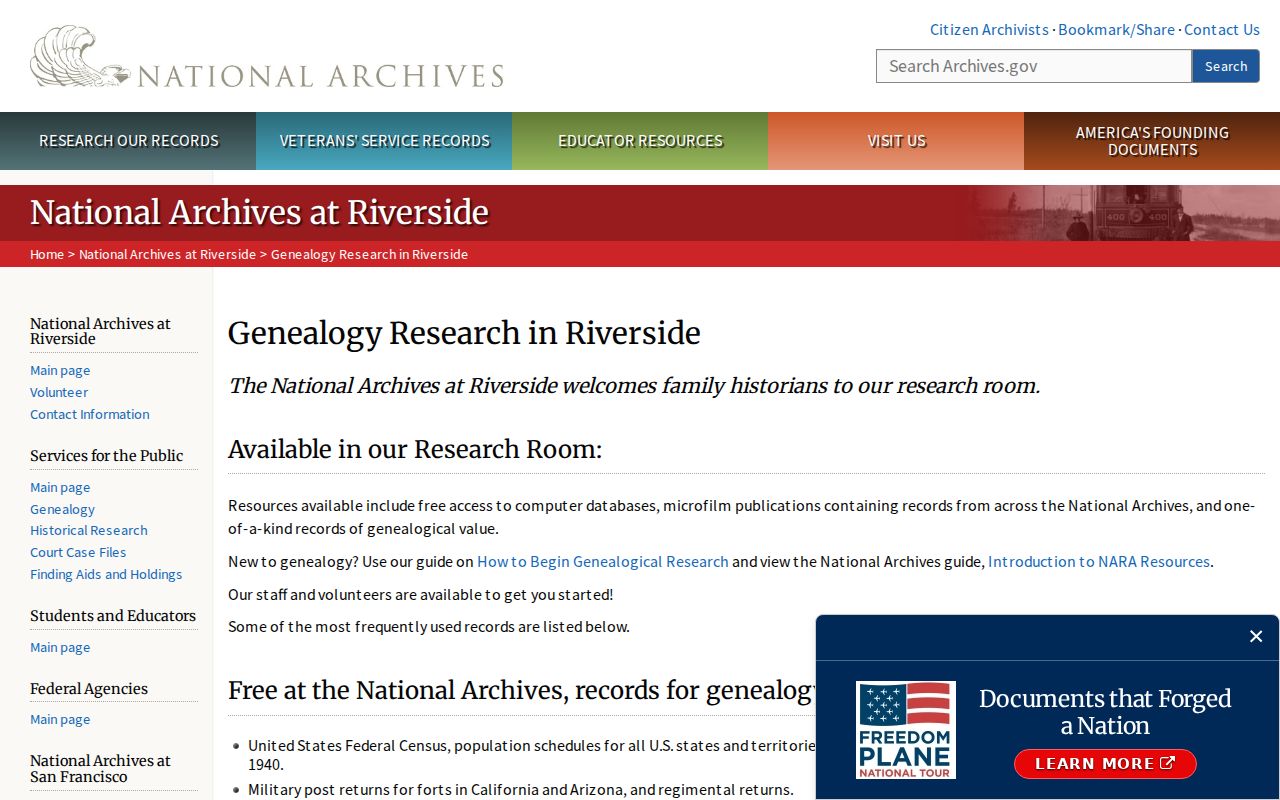
NARA Riverside sits at 23123 Cajalco Road in Perris. Its research room is appointment-only, Monday through Friday, 9 a.m. to 4 p.m. The listed contact is 951-956-2000 and riverside.archives@nara.gov. The image supports an archive fallback rather than any claim of a digitized Manhattan Beach directory.
| Period | Research milestone |
|---|---|
| 1912 | Manhattan Beach incorporated, separating later city records from earlier county and tract descriptions. |
| 1927 | “Beach” was added to the city name, creating another catalog and newspaper search term. |
| 2022 | History Associates began a professional inventory and catalog project for more than 1,000 Society items. |
| 2024 | The Society's history sale reported multiple copies of the verified 1960 phone directory. |
| 2026 | An exhaustive online Manhattan Beach title and year list remains unverified. |
No authoritative digitized Manhattan Beach directory page exists online. The honest next step is a targeted inquiry to MBHS or LA County Library reference staff for exact titles, years, publisher wording, and reverse-section presence. Never fill a gap with a guessed publisher. A borrowed directory run from another city would mislead more than it helps.
Research gap. Only the 1960 phone directory is specifically verified; exact broader holdings require curator or reference confirmation.